
Article
The promise of solar for women entrepreneurs in rural Odisha lies in recognising women not as passive beneficiaries but as central architects of a regenerative future.

A Life Shaped by Resilience
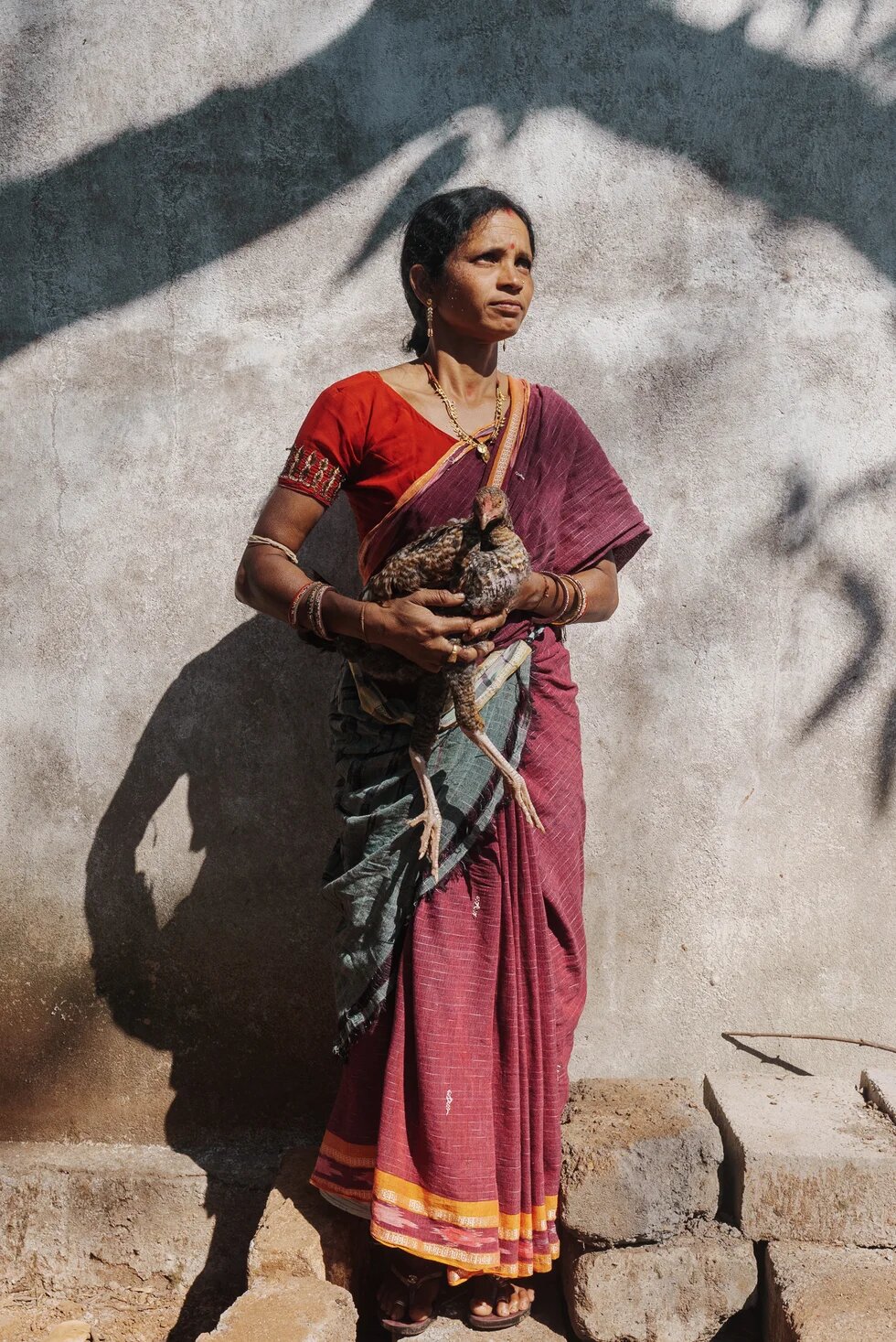
For most of her 36 years Dipti has lived a challenging life. But today she is an entrepreneur running a small poultry business from her home in Lamtaput, tending to 300 chicks that flutter under her careful watch.
Each one represents not just income, but the independence she carved out of years of struggle. Dipti now earns between ₹7,000 and ₹10,000 a month, a remarkable leap from the uncertain days when she earned barely enough through daily wage labour.
Her story begins in a small mud house not far from the village where she lives and works today. Born into a family from the Other Backward Classes (OBC), Dipti was the eldest of several siblings. While her brothers went to school, she stayed home cooking, fetching water, and caring for the younger ones. “My brothers went,” she says quietly, “but I stayed.”
Her parents were daily wage labourers, their earnings unreliable and meals never certain. When food ran short, Dipti was the one who stayed hungry.
At six, she began working as a house help for a local teacher. Between scrubbing floors and washing utensils, she learned only one thing for herself: To sign her name. “That’s all the schooling I ever got,” she says.
At 15, she was married off, another decision made for her. Her husband was studying to graduate, and Dipti laboured in fields and homes so he could continue his education. But he never graduated, and their lives remained trapped in debt and daily labour.
The First Step Towards Change
Two years ago, Dipti’s life began to change quietly and through her own determination. She had become a member of a self-help group (SHG) formed through Odisha’s Mission Shakti department. At a meeting of her SHG, she heard about a government poultry scheme managed by the veterinary department to support individual livelihoods. It sounded ambitious – a 2000-bird unit – but Dipti saw in it a chance to rebuild her life. With her brother’s help, she filled out the paperwork and secured approval.
The first challenge came quickly: She had to build the shed before receiving any funds. Dipti borrowed ₹50,000, bought materials on credit, and constructed the poultry unit with her own hands. When the first instalment finally came through, she purchased broiler chicks, fast-growing but demanding.
The results were devastating. The chicks required steady warmth and expensive feed; with unreliable electricity in Lamtaput, many died. “When the power went out, the chicks got cold and died one after another,” she recalls.
The losses were crushing. Training had been minimal, and there was no one to guide her. Yet, Dipti refused to give up. At another SHG meeting, she heard about desi or local breeds, hardier, easier to manage, and suited to her environment. Selling off the broilers, she took another small loan and began again, this time with 500 desi chicks but the challenge of regular electricity still remained.
A Solar-Powered Turning Point
Around the same time Dipti first heard about solar power. She didn’t quite understand what it meant but knew one thing: her chicks were dying because of the lack of heat and light. Without warmth, the young chicks would not survive and she would not be able to earn a livelihood.
With support from a local NGO SPREAD and SELCO Foundation, Dipti decided to take the leap. SPREAD supports in identifying the women entrepreneurs and walking with them through the entire journey of adapting solar power – from initial awareness to everyday troubleshooting. Their team helps women build confidence, understand the technology in simple terms, and access the required financial and institutional support. SELCO provides the solar panels and the technological expertise required to make the systems reliable and sustainable over time.
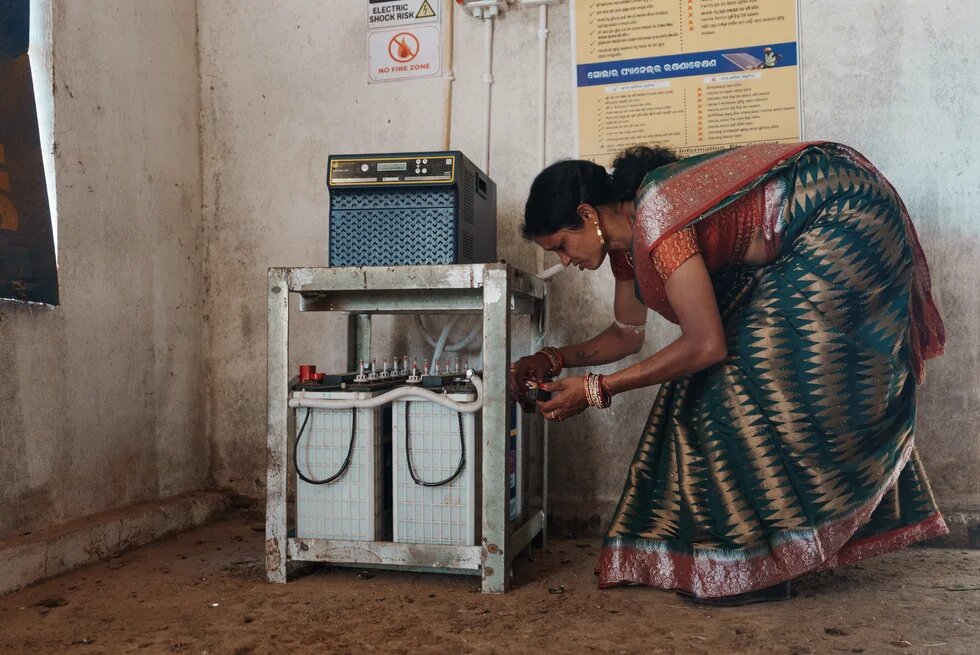
Dipti installed a 2 kilowatt (kW) solar panel system, complete with an eight-hour battery backup, on her shed. The upfront cost was ₹25,000, subsidised by 75 per cent through the project. For the first time, her poultry shed had reliable light and warmth. Fans and halogen bulbs kept the air circulating and the chicks comfortable, even through cold nights. Mortality rates dropped dramatically.
The change was immediate and visible, her losses reduced, her confidence grew, and she was able to make a steady income. “Earlier, I used to say I work for others,” Dipti says, her eyes bright with pride, “now I say I have my own business”.
For a woman who had spent most of her life in uncertainty, solar became more than technology; it became trust. Reliable, clean, and constant, it gave her what years of labour had not, a sense of control over her time, her work, and her future.
Even as Dipti speaks enthusiastically about her solar-powered poultry shed, she knows the journey is far from over. The steady glow of her halogen bulbs has brought relief and dignity but not complete certainty. During long stretches of rain, the solar system falters. Power dips, batteries drain, and the fragile rhythm of her enterprise is disrupted. She says: “I just know how to clean the panels and check the battery but if something breaks, we have to depend on the local NGO to call the technician from the neighbouring district.”
Her shed was built to house 2,000 birds, yet she maintains only 300. Scaling up would mean more feed, higher costs, and a larger working capital cycle, investments she cannot yet afford. A ₹60,000 debt still shadows her small successes. Each month is a balancing act between earnings, repayments, and the daily demands of survival. “I want to grow but can’t take that risk right now,” Dipti says.
Possibilities of Scaling Change
Dipti’s story captures both the promise and the limits of rural solar adoption. Technology can open doors but who helps women like her walk through them? Reliable energy has transformed her work, but energy alone cannot dismantle the web of debt, limited market access, and fragile supply chains that shape her livelihood.
And yet, beneath these struggles lies a quiet possibility: Could solar do more and expand their businesses sustainably?
Dipti’s story also reveals how fragile transformation can be without deeper systems of support as many women poultry entrepreneurs in Koraput face similar barriers. Renewable energy like solar has shown what’s possible, but scaling up requires more than technology; it requires redesigning the ecosystem around women’s lives and labour.
Women-centric financing is the first step. Most women entrepreneurs juggle business costs alongside household expenses, childcare, and debt. Flexible credit, lower collateral, and financing models that link energy and enterprise could give them the breathing room to grow.
But financing alone isn’t enough. Reducing household drudgery and redistributing care work is equally vital. When homes are powered by reliable solar energy lighting kitchens, charging mobile phones, running small appliances, women save hours otherwise spent collecting firewood or cooking in smoke-filled rooms. Those reclaimed hours could be redirected into building and managing their enterprises, if that is what they choose to do.
Equally critical is technical training. If women were not just users but maintainers and producers of solar systems, the dependency on external technicians would fade. For example, local women trained as technicians could service systems, troubleshoot issues, and create new income streams.
Integrated livelihood design and community solar hubs could link energy access with markets, feed units, and storage, turning isolated efforts into collective strength.
Finally, policy recognition matters. Women like Dipti must be seen not as passive beneficiaries but as central actors in India’s clean energy transition.
If such systems were in place, Dipti’s shed would not stand alone; it would be part of a vibrant, women-led solar economy lighting up rural livelihoods and redefining empowerment from the ground up.
The energy transition is often spoken of in the language of megawatts, emissions, and policy targets. But in Koraput, it lives in smaller, quieter revolutions in a poultry shed where solar light keeps 300 chicks warm, and a woman rediscovers her power to dream.
Dipti’s story reminds us that when energy access meets women’s agency, the outcomes go far beyond productivity; they reshape lives. Energy is not just about electrifying villages; it’s about illuminating the spaces where women labour is, often unseen, in the kitchens, the sheds, the fields. When these spaces are powered, so too is the possibility of equality.
For the energy transition to be truly just, it must have a gender lens recognising women not as passive beneficiaries but as central architects of a regenerative future. In Dipti Khare’s solar-lit shed lies a glimpse of that future: Resilient, rooted, and radiant.


